Metastasis

One drug.
One patient.

On 19 August 2026 a cancer therapy manufactured for a single person beat the standard of care in a Phase 3 trial. This is what that took, what it did not prove, and why the next bottleneck is compute.
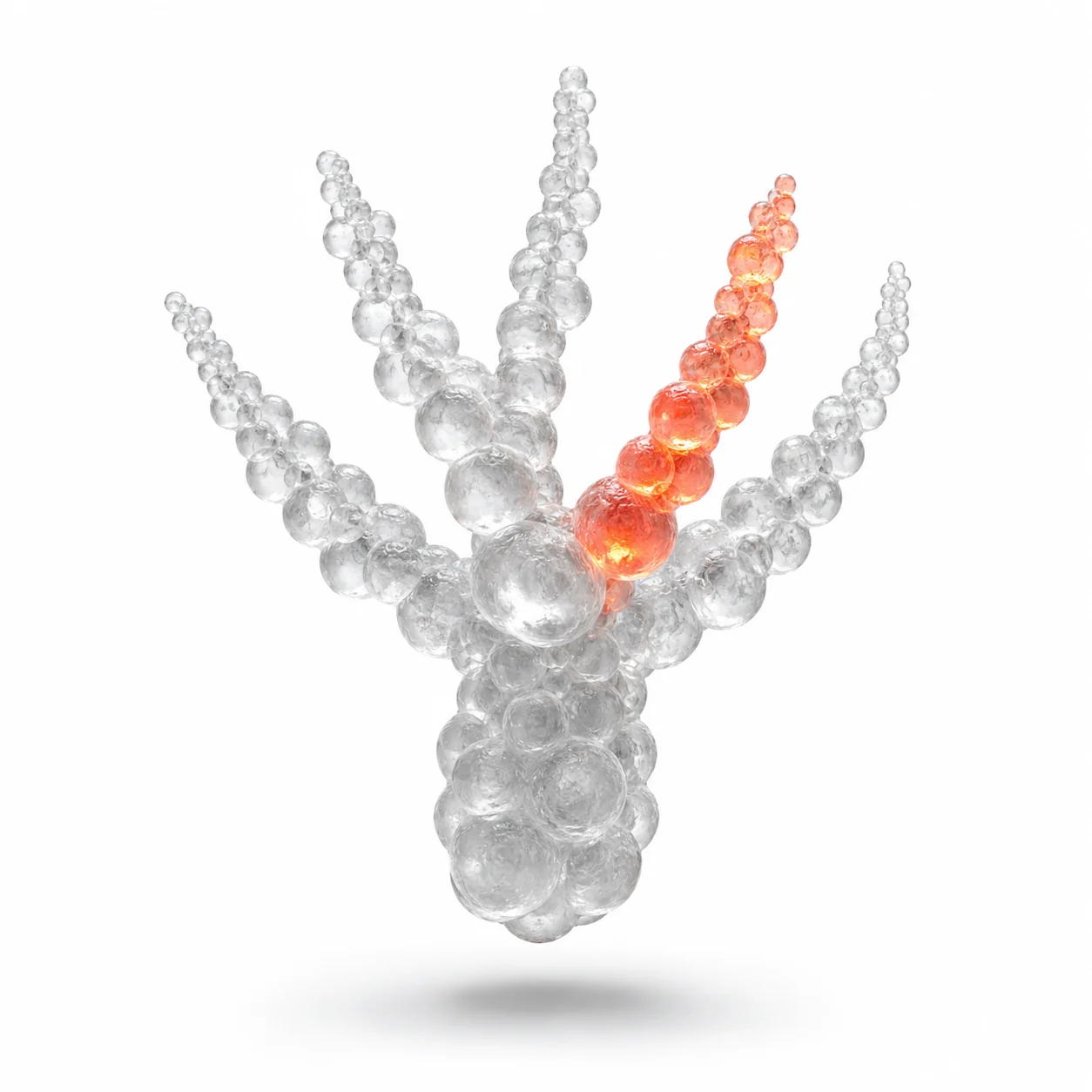
A tumour drawn as a branching tree of translucent cells, one branch lit — the drug-resistant subclone.
Open the chamber → 13 cancers · 4,992 protocols
01 The chamber

Treatment is selection pressure.

Treat a tumour and you do not kill it evenly — you clear space for whichever subclone was already immune. A targeted drug selects for drug resistance. Immune pressure selects for antigen loss. They fail in different directions, which is the whole argument for combining them.

That is easy to assert and hard to believe until you watch it happen. So the model is on this site, running, and you can drive it.

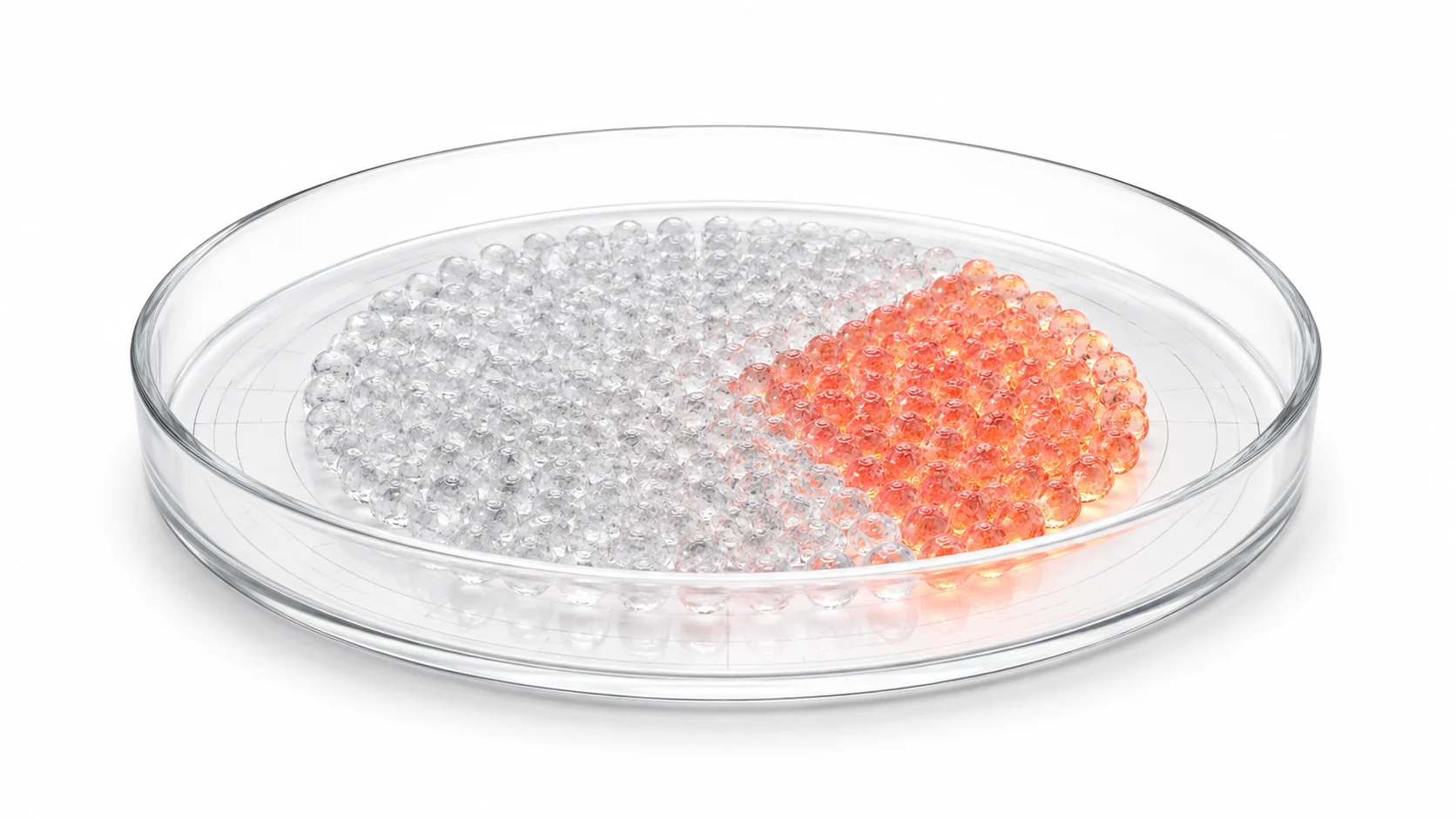
A glass culture well holding a colony of translucent cells; one wedge of the colony glows amber-red — the resistant subclone taking over.
Live simulation · runs in your browser

Treat a cancer.
Watch it answer back.

Pick one of thirteen cancers, each carrying its own mutational burden and immune infiltration. Combine seven treatment modalities across three dosing schedules. Then watch three thousand cells sort themselves into sensitive, drug-resistant and immune-escaped — and find out, in months, whether your protocol cleared it, contained it, or bred something worse.

13Cancers, from melanoma to pancreas
4,992Protocols you can express
3Competing cell phenotypes
60Months per run, in about 25 seconds
Launch the chamber Full screen · 3D · click any cell to ask what it is

Whether any of it works depends on how much there is to aim at. Mutational burden, by tumour type:

Three ways a run can end Cleared — below detection for six months. In the model that is a clearance; in a clinic it is a follow-up appointment.

Contained — still alive at sixty months, held in check by the phenotypes competing with each other.

Progression — back past where it started, and now made of whatever your protocol could not touch.
02 The result

What was proved,
and what wasn't.

Intismeran autogene plus Keytruda met both recurrence-free and distant metastasis-free survival in 1,137 patients with resected stage IIB–IV melanoma. It is the first Phase 3 win for an individualised neoantigen therapy, and the first time anything has beaten Keytruda alone in this setting. Both of those are real firsts.

What has not been published is how large the effect is. No hazard ratio, no p-value. Overall survival is explicitly not mature. The number the market moved on is a number nobody has seen.

INTerpath-001 · Phase 3 · 2026
Patients1,137
Randomisation2:1
Primary endpoint · RFSMET
Key secondary · DMFSMET
Hazard ratioNOT DISCLOSED
Overall survivalNOT MATURE
KEYNOTE-942 · Phase 2b · Lancet 2024
Patients157
18-mo RFS · combination79%95% CI 69.0–85.6
18-mo RFS · Keytruda alone62%95% CI 46.9–74.3
Hazard ratio0.56195% CI 0.309–1.017
p-value · two-sided0.053
Grade ≥3 adverse events25% vs 18%
Read the confidence interval The Phase 2b hazard ratio everyone is quoting came from 157 patients and its 95% interval crosses 1.0 — at 18 months it did not clear the conventional significance threshold. Five-year follow-up firmed it up (HR 0.51, 95% CI 0.294–0.887). The Phase 3 is seven times larger and has published nothing yet. Effect sizes usually shrink when a small trial scales.
03 The build

The drug is made after the diagnosis.

Every dose is manufactured for one person, from that person's tumour. Five of these six steps are laboratory work with known answers. One is a prediction problem — and it is the reason this is a computing story.

01
Resect
The tumour comes out. Everything downstream is computed from that tissue plus a normal blood sample.
02
Sequence tumour and normal
Whole-exome and RNA sequencing. Comparing the two is what separates a mutation the cancer acquired from the variation the patient was born with.
03
Call the mutations
Thousands in a melanoma. Most are passengers along for the ride; a few drive the growth. Either kind can yield a target.
04
Predict presentation, rank, select ≤34
Which mutant peptides will this patient's own HLA molecules actually display on the cell surface? Only displayed peptides can ever be seen by a T cell. An algorithm ranks them; the top 34 become the drug.
← THE BOTTLENECK. THIS STEP IS MADE OF SOFTWARE.
05
Encode one mRNA
All 34 into a single strand, lipid-nanoparticle formulated, intramuscular. One manufacturing run, one patient.
06
Dose alongside pembrolizumab
1 mg every three weeks, up to nine doses, with Keytruda 400 mg every six weeks. The mRNA says what to hunt; the checkpoint inhibitor takes the brakes off.
04 The targets

Binding is not the same as working.

The question a pipeline is usually asked is does this peptide bind this HLA? The question that decides whether a patient benefits is different: what evidence is there that this exact target matters? Nine modelled candidates below — the positions are illustrative, the reasoning attached to each is real. Pick one.

← Low expressionPresentation score →
05 Proof of work

None of this needs inventing.

The open ecosystem for neoantigen selection already exists and is already in clinical use. It is the right place for any honest effort to start — by integrating, not replacing.

pVACtools

Griffith Lab, WashU. Modular suite covering SNVs, indels, fusions, splicing, vector design and human review. Over 164,000 PyPI downloads.

MHCflurry

Open-source MHC class I binding predictor built on allele-specific neural networks.

OpenVax

Mount Sinai. Raw tumour/normal reads in, vaccine contents out. In use in three clinical trials — NCT02721043, NCT03223103, NCT03359239.

Not a treatment — just a model Metastasis is a study and a simulator. Nothing here diagnoses, treats or funds anything, no sequencing runs on your device, and it is not affiliated with Merck, Moderna, WashU, Mount Sinai or OpenVax. If you want to donate real compute to cancer research, DreamLab (Imperial College London with the Vodafone Foundation) and World Community Grid's Mapping Cancer Markers have been running genuine workloads for years. Go there.